
NASA Discovers Supermassive Black Hole Traveling at Incredible Speed
6 months ago
-- ADVERTISEMENT --
Scientists have detected a runaway supermassive black hole moving so fast it could travel from Earth to the Moon in just 14 minutes. The cosmic object is estimated to be 20 million times more massive than our Sun.
NASA has announced the discovery of a remarkable cosmic phenomenon: a runaway supermassive black hole traveling through space at extraordinary velocity. Moving at such incredible speed, this object could cover the 384,400 kilometers between Earth and the Moon in merely 14 minutes.
The astronomical object is a supermassive black hole that has been ejected from its original location, with an estimated mass 20 million times greater than our Sun. Its journey through space has left behind a spectacular trail of gas and stellar material stretching approximately 200,000 light-years—twice the diameter of the Milky Way.
According to NASA's findings, this traveling black hole is pushing gas ahead of it, creating new stellar formations along a narrow corridor rather than consuming nearby stars. The object is positioned at the end of a stream extending from its original host galaxy, marked by a notably bright concentration of ionized oxygen at its outermost tip.
-- ADVERTISEMENT --
International astronomers made this serendipitous discovery while observing the dwarf galaxy RCP28, located 7.5 billion light-years from Earth, using NASA's Hubble Space Telescope. Pieter van Dokkum from Yale University explained that they confirmed Hubble observations using the low-resolution spectrometer on the KECK-1 telescope in Hawaii.
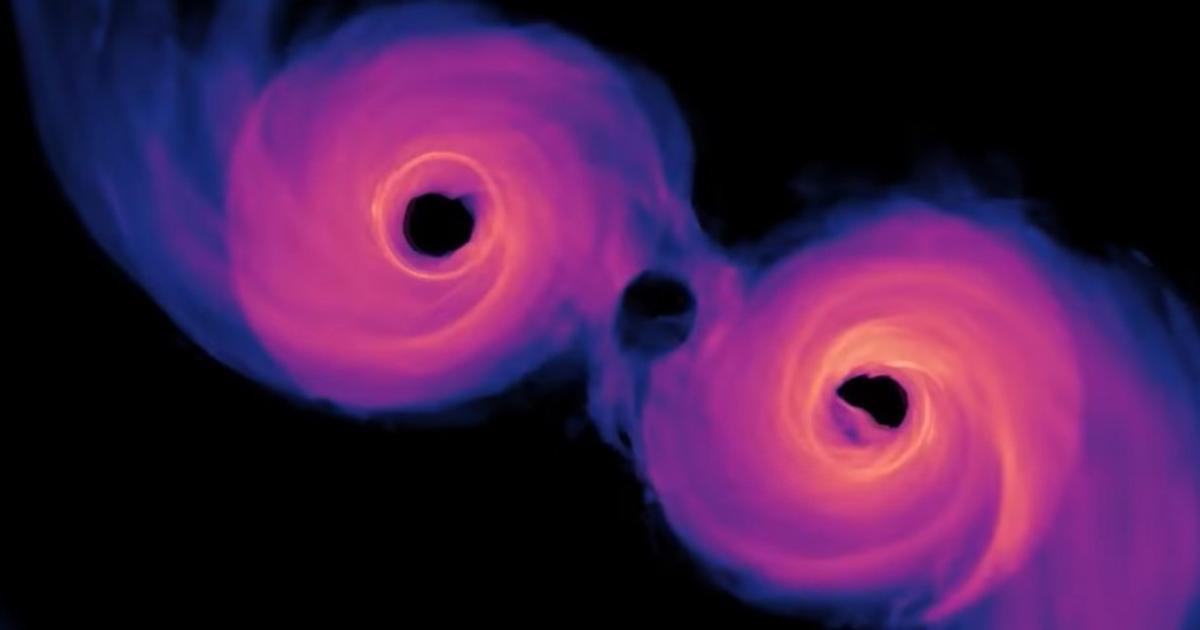
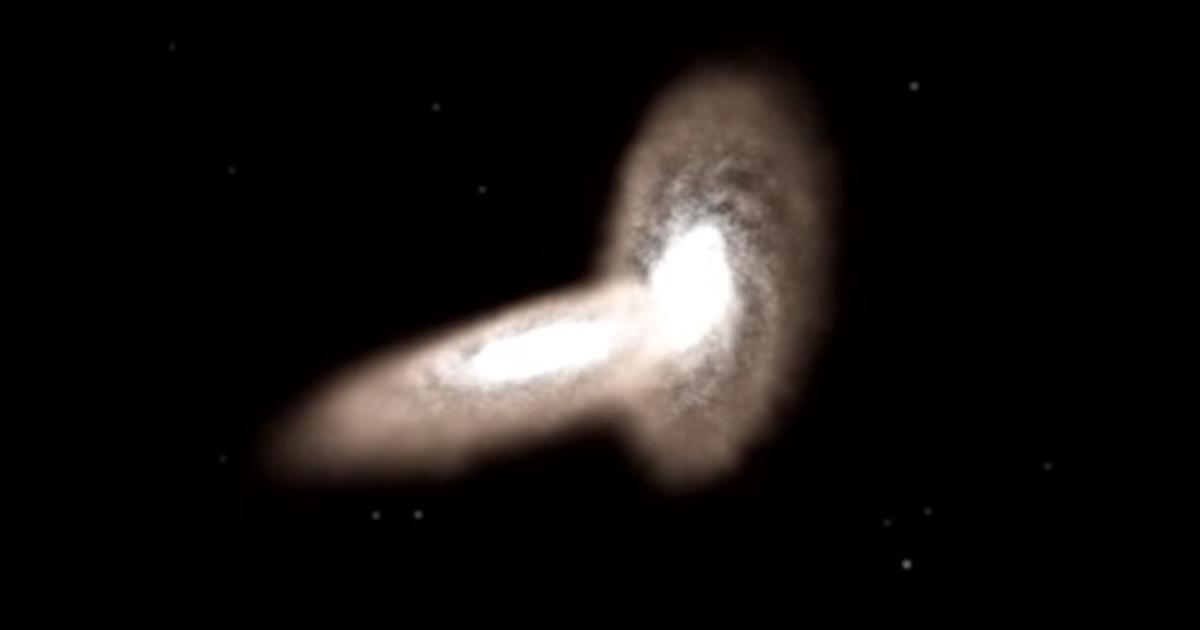
The data revealed the black hole traveling through a gas halo at a velocity of 1,600 kilometers per second, having been ejected from its host galaxy. This ejection occurred approximately 40 million years ago when three black holes merged in a chaotic and unstable configuration following collisions between their host galaxies.
The research team, whose findings were published in The Astrophysical Journal Letters, suggests this dramatic motion is heating and impacting the surrounding gas. NASA emphasizes that the next phase involves follow-up observations using the James Webb Space Telescope and the Chandra X-ray Observatory to further understand this extraordinary cosmic object.
In related astronomical developments, scientists recently documented an extremely rare cosmic event when a star was drawn toward a black hole in a tidal disruption event (TDE). Researchers published their findings in Nature and Nature Astronomy, with Maryland University astronomer Itay Andreoni noting that "the luminous jet of material was launched at nearly the speed of light and pointed directly toward Earth."
-- ADVERTISEMENT --
Source: Clarin.com